How to Collect & Mail a Fecal Sample for Parasite Testing
If you're planning to send a fecal sample to the lab for parasite testing, you may be wondering: How fresh does it need to be? How much should I collect? Do I need to keep it cold? And how exactly am I supposed to mail poop?
These are questions I get all the time, and the good news is that collecting and mailing a fecal sample is pretty simple.
The quality of the sample does matter, though. What happens to a sample between the time it leaves your animal and the time I put it under the microscope can affect what I'm able to see and how useful the results are.
So, let's walk through how I recommend collecting, storing, and shipping samples to the Farmer Analytics lab.
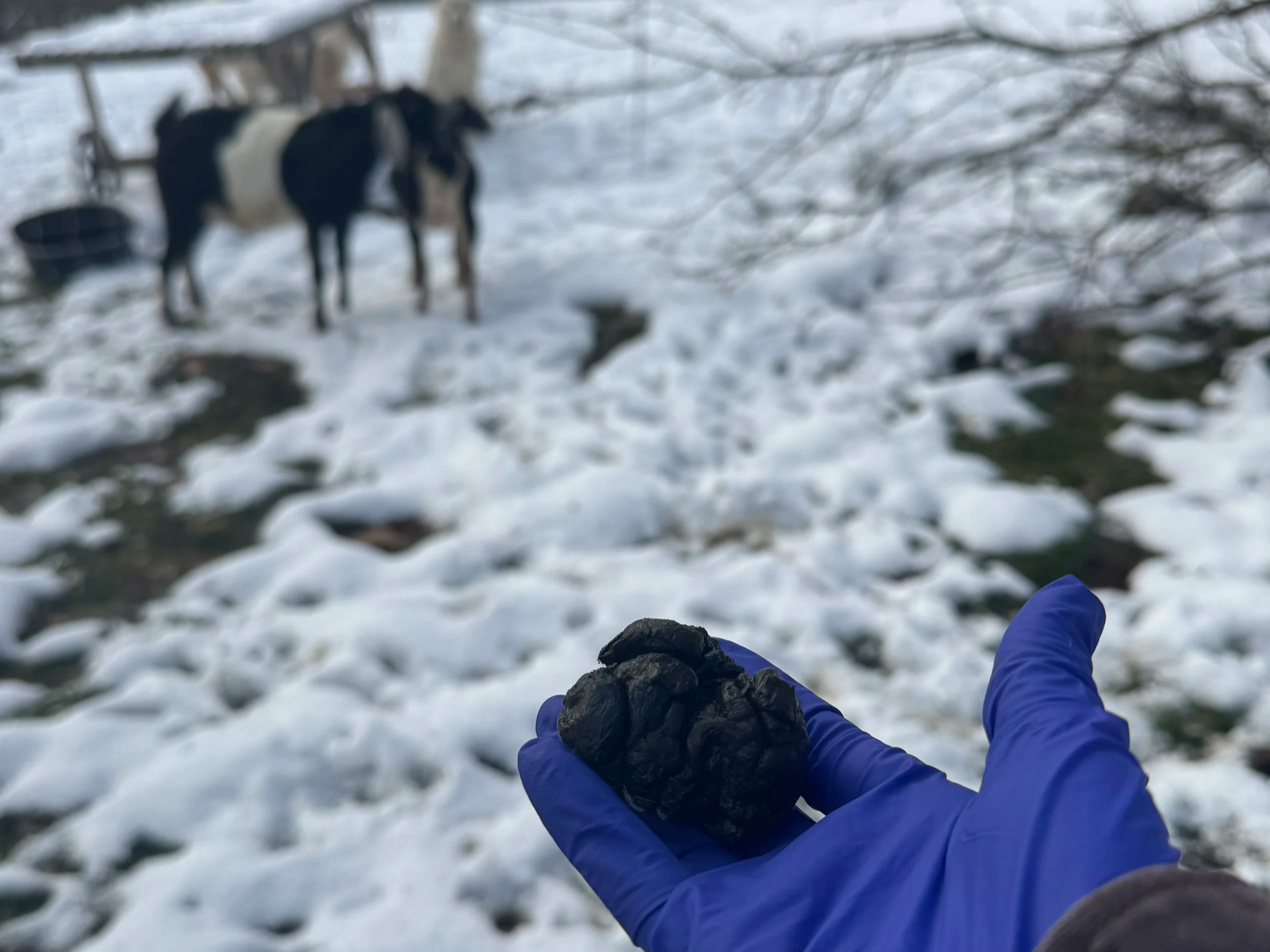
It all starts with a fresh sample! Proper collection and handling help ensure the most useful results possible.
Start with a fresh sample
Fresh is best!
Whenever possible, collect feces that you know came from the animal you want tested. One of the easiest ways to do this is to wait until you see the animal defecate and then collect the sample right away.
A sample can also be collected directly from the rectum when appropriate, which can be helpful when you need to be certain the sample came from a specific animal. If you're not comfortable collecting a rectal sample, there's no need to. Watching the animal defecate and collecting the fresh feces from the ground works just fine.
If you're collecting feces from the ground, choose material that is clearly fresh and hasn't been sitting outside exposed to heat, sunlight, rain, insects, or other environmental contaminants.
And yes, environmental contamination really does show up under the microscope! Plant material, pollen, free-living organisms, and all kinds of other interesting things can end up in a fecal sample.
Parasite eggs and larvae can also continue to develop after feces leave the animal, which is another reason I want to examine a sample that has been collected and stored properly.
How much should you collect?
You don't need to send me an entire bag of poop!
For most routine fecal tests, approximately 5 grams of feces is plenty. As a practical rule, though, I'd rather receive a little too much than not have enough material to perform the requested testing.
Some tests also require additional feces. For example, if you're requesting a Baermann test, plan to send an additional 5–10 grams of sample.
If you're requesting multiple tests or aren't sure how much to collect, check the testing instructions or reach out before mailing your sample.
Keep samples separate and clearly labeled
If you're sending samples from multiple animals, package and label each sample individually unless you're intentionally submitting a composite sample.
Animal names or IDs are extremely helpful. When several little bags of feces arrive together, I need to be able to confidently match each sample with the correct animal and submission information.
Composite samples can also be useful in certain situations, but they answer a different question. When feces from multiple animals are combined, the result gives us information about parasite egg shedding within the group. It cannot tell us which individual animals are contributing to that result.
Keep it cool
If you aren't dropping off or mailing your sample immediately, place it in the refrigerator.
Samples should be placed in a securely sealed, leak-proof bag or container and kept cool until they're ready to go.
Do not freeze the sample.
Keeping feces refrigerated helps slow down the changes that naturally begin happening after the sample leaves the animal. My goal is to look at a sample that is as representative as possible of what was happening at the time you collected it.
Yes, you really can mail it!
I receive fecal samples through the mail regularly. The important part is packaging them properly and getting them here promptly.
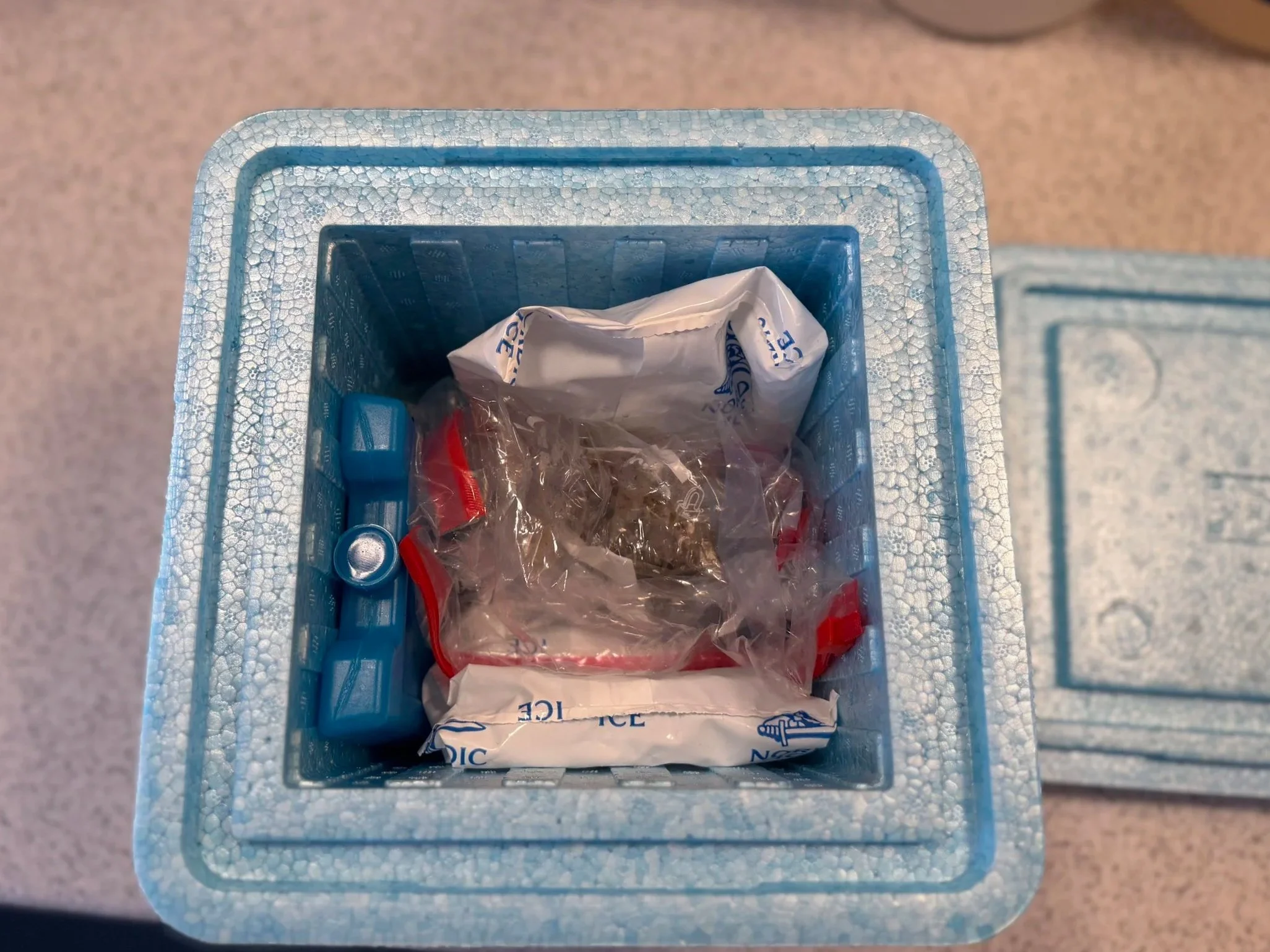
Package fecal samples securely with an ice pack and choose a shipping method that will get them to the lab within two days.
I recommend shipping samples with an ice pack and choosing a shipping method that should get them to the lab within two days.
Make sure your sample is securely sealed and placed inside secondary leak-proof packaging. Nobody wants a fecal sample escaping inside a shipping box!
I also recommend shipping earlier in the week whenever possible. That helps prevent samples from spending an unnecessary weekend sitting in transit.
And don't forget the ice pack. Even if it isn't still frozen when the package arrives, it helps keep the sample cooler during at least part of its trip.
Don't forget the submission form
Before sending your sample, make sure to fill out a submission form. This gives me the information I need to match your sample with the correct animal, testing request, and contact information once it arrives at the lab.
The submission form will ask for basic information such as the animal's name or ID, species, sample collection date, and the type of testing you're requesting. Depending on the reason for testing, you can also include relevant information such as recent parasite treatments or other notes you'd like me to be aware of.
If you're sending samples from multiple animals, make sure the names or IDs on your samples match what you've entered on the submission form. This makes it much easier to keep everything organized from the moment your package arrives through the final report.
Choose the test that matches your goal
When filling out your submission form, you'll also need to select the type of fecal testing you'd like performed. And this is an important step because not every fecal test answers the same question.
A quantitative fecal egg count is designed to estimate the number of parasite eggs or oocysts being shed per gram of feces. A qualitative screening focuses more on detecting and identifying parasite eggs and oocysts that are present in the sample. Other parasites may require a different testing method altogether.
Before choosing a test, think about what you're hoping to learn from the sample.
Are you monitoring parasite egg shedding? Looking for a particular type of parasite? Evaluating whether a treatment was effective? The question you're trying to answer can help determine which testing method makes the most sense.
And if you're not sure which test fits what you're looking for, you can always reach out before submitting your sample.
A good result starts with a good sample
Once your package arrives at Farmer Analytics, I'll take it from there.
But you play an important role before it ever reaches my microscope. Starting with a fresh sample, keeping it cool, shipping it promptly, and providing accurate information all help me get the most useful information possible from the sample you send.
Ready to submit a sample? Visit the Farmer Analytics Sample Submission page for current testing options, submission instructions, and the online submission form.
Want to see what happens after your sample arrives? Watch: What Happens to Your Fecal Sample When It Arrives at the Lab? and come behind the scenes with me as I take a sample from mailbox to microscope.