


Fecal Egg Counting Courses
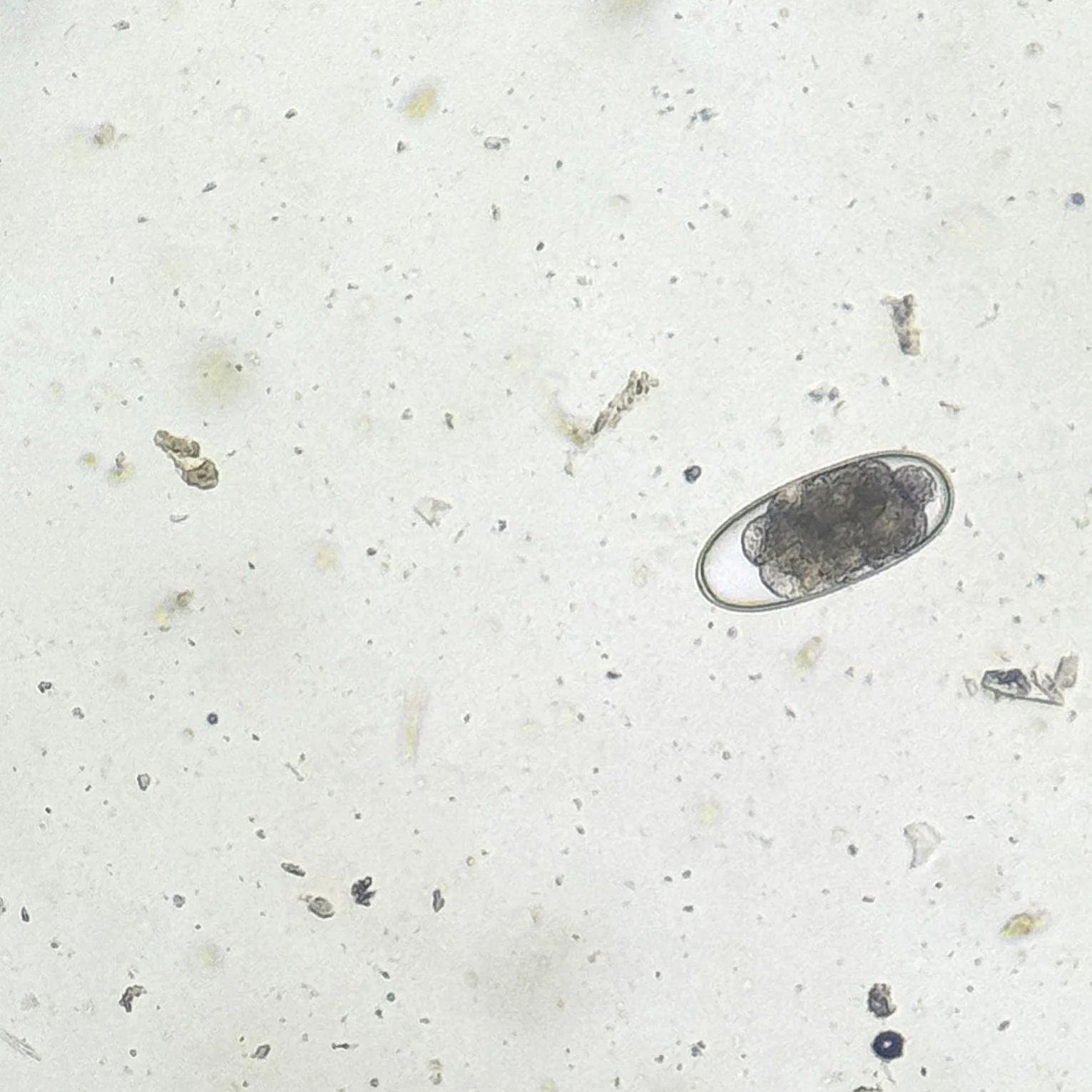
Take Control of parasite management
Learn to Perform Your
Own Fecal Egg Counts
at Home
Live online courses for horse and livestock owners.
Take the guesswork out of parasite monitoring.
Beginner friendly. No microscope experience required.
✔ Small live classes (maximum 20 households)
✔ Live instructor-led courses offered only a few times each year
⬇ View Upcoming Courses
Choose the Course that’s right for you
Individual courses or a bundle — whichever works for your schedule and needs.
DIY Fecal Egg Counting - Ruminants
Price: $200 USD
Dates:
September 12 & 19, 2026 (Closed)
February 20 & 27, 2027 (Registration open)
Time: 11:00 AM ET (Live on Zoom + Replay Access)
Description:
Learn to confidently perform fecal egg counts for sheep, goats, and cattle. This course covers sample preparation, calculations, parasite identification, and practical parasite management decisions you can apply on your farm or in practice.
DIY Fecal Egg Counting - equine
Price: $200 USD
Dates:
August 1 & 8 , 2026 (Closed)
March 6 & 13, 2027 (Registration open)
Time: 11:00 AM ET (Live on Zoom + Replay Access)
Description:
A horse-specific fecal egg counting course covering equine sample preparation, calculations, parasite identification, and parasite management. Foundational fecal egg counting concepts are included, with expanded instruction focused on equine-specific protocols and decision-making.
Ruminant + equine Course Bundle
Price: $350 (Save $50) USD
Dates:
February 20 & 27, 2027 (Ruminant)
March 6 & 13, 2027 (Equine)
Time: 11:00 AM ET (Live on Zoom + Replay Access)
Description:
Enroll in both the ruminant and equine DIY fecal egg counting courses at a discounted rate. Ideal for mixed-species farms, veterinarians, and professionals working across species.
Foundational material is shared across both courses, with species-specific protocols, parasite identification, and management strategies taught separately.
Already a student? Ruminant Course alumni receive discounted access to the Equine Course. Email me for your discount. Some foundational material may feel familiar, that’s intentional. The focus will be on species-specific protocols and applications.
Why Learn Fecal Egg Counting?
Instead of relying on guesswork or routine treatment schedules, learn how to monitor parasite pressure and make more informed parasite management decisions.
✔ Better understand parasite burdens
✔ Monitor treatment effectiveness
✔ Support herd and pasture health
✔ Reduce unnecessary deworming
✔ Gain confidence interpreting fecal egg count results
Real-world results from students who completed the course.“Thanks to your class I was able to save a ram lamb from bottle jaw/ barber pole.”
— Sidney Holland, Holland Legacy Farms
Ruminant Fecal Egg Counting Course
By the end of this course, you’ll be able to…
Collect quality fecal samples
Perform a fecal egg count using the Modified McMaster technique
Identify common parasite eggs
Interpret fecal egg count results with confidence
Make informed parasite management decisions
Support long-term herd, flock, and pasture health through sustainable parasite management
Monitor parasite trends over time
What students Are Saying
“This course was well-paced and explicit. The materials were helpful and clear. Even though I have no science background, I feel confident I have the basics to start gaining experience now.”
— Carrie McClure
Equine Fecal Egg Counting Course
“I did this course with my 6 year old daughter assisting/following along (because science is awesome!). Everything was straight forward and easy to understand as well as follow along to learn. I feel so much more in control of my herd health and would recommend this class to anyone with their own ruminants.”
— Chelsea
Ruminant Fecal Egg Counting Course
“The online platform has great resources and is well structured. The live online classes are just as well structured, with an easy to follow pace. Carly explains the material very clearly and a pleasure to listen to.”
— Caroline
Ruminant Fecal Egg Counting Course
Enroll
Reserve your spot and receive immediate access to the course website and a welcome email with everything you need to get started.
Prepare Your Equipment
Access the recommended materials list, microscope recommendations, shopping links, and exclusive student discounts to confidently choose your microscope and supplies.
Join the Live Zoom Classes
Attend two live, interactive classes with demonstrations, practical instruction, and plenty of time for questions. Can’t attend live? You’ll have 30-day access to the class recordings.
Practice with Confidence
Apply what you’ve learned on your own farm or with your own animals using the step-by-step protocols and downloadable resources.
Continued Learning
Stay connected through the student community and refer back to your lifetime course materials whenever you need them.
Here’s how it works
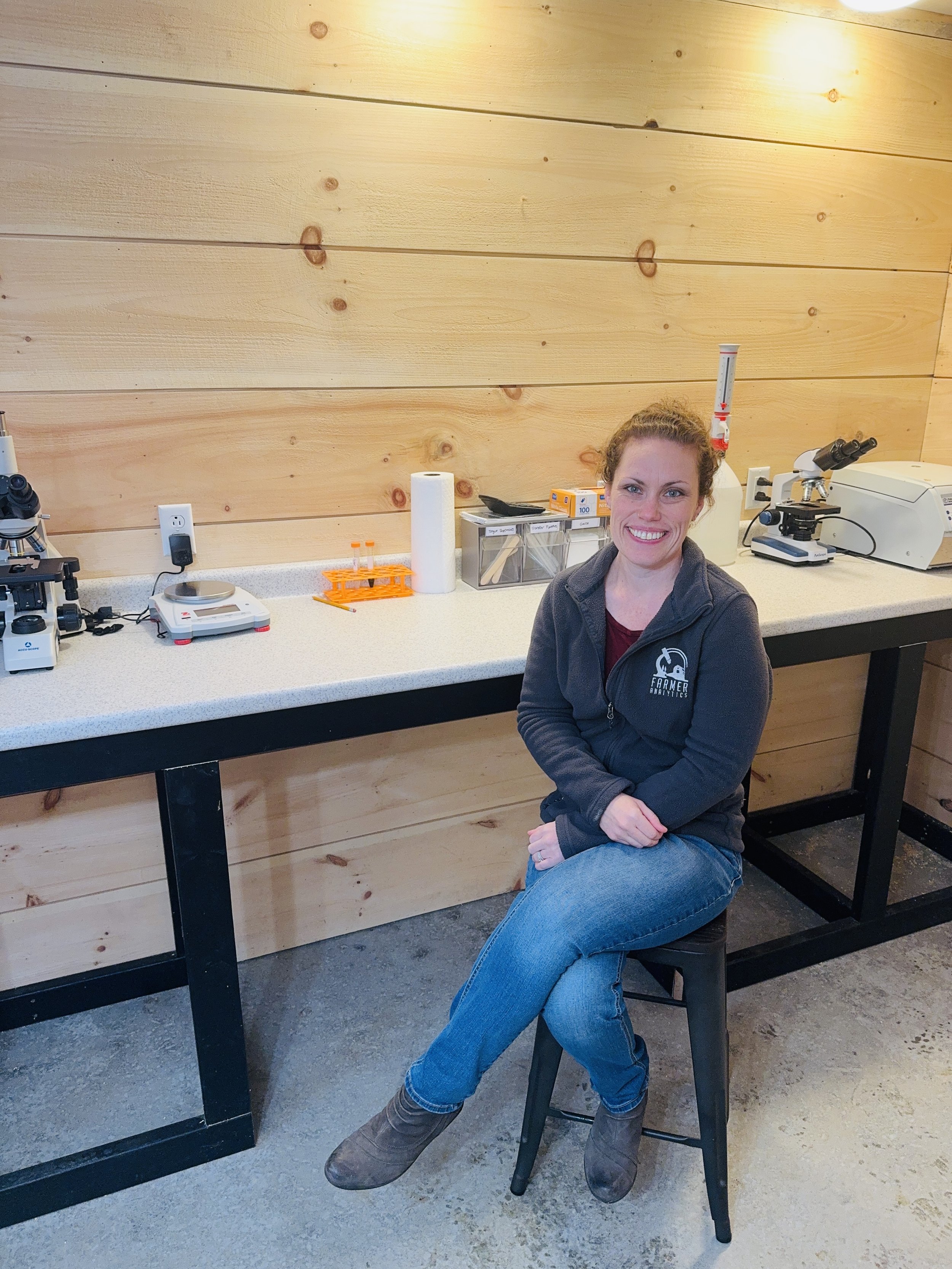
A practical tool for understanding parasite pressure in your herd or flock“As a livestock owner for most of my life I have been familiar with parasite issues in general terms and we typically have used dewormers in the spring before turnout and then again in the fall without any testing. This course has given me a tool to use to identify different parasite eggs and to get a snapshot of the amount of pressure that may be present in our flock. I hope to utilize this information to make better management decisions. I recommend this course if you have a desire to know what is putting pressures on your animals.”
— Laura Fowler
Ruminant Fecal Egg Counting Course
What’s included with Every enrollment
✔ Lifetime access to course materials
✔ Step-by-step Modified McMaster protocol
✔ Parasite identification guide
✔ Materials checklist
✔ Record-keeping worksheets
✔ Microscope recommendations & shopping links
✔ Exclusive student discounts
✔ Downloadable tracking worksheets
✔ Guided practice exercises
✔ Private student community
✔ 30-day replay access to live classes
Meet your Instructor
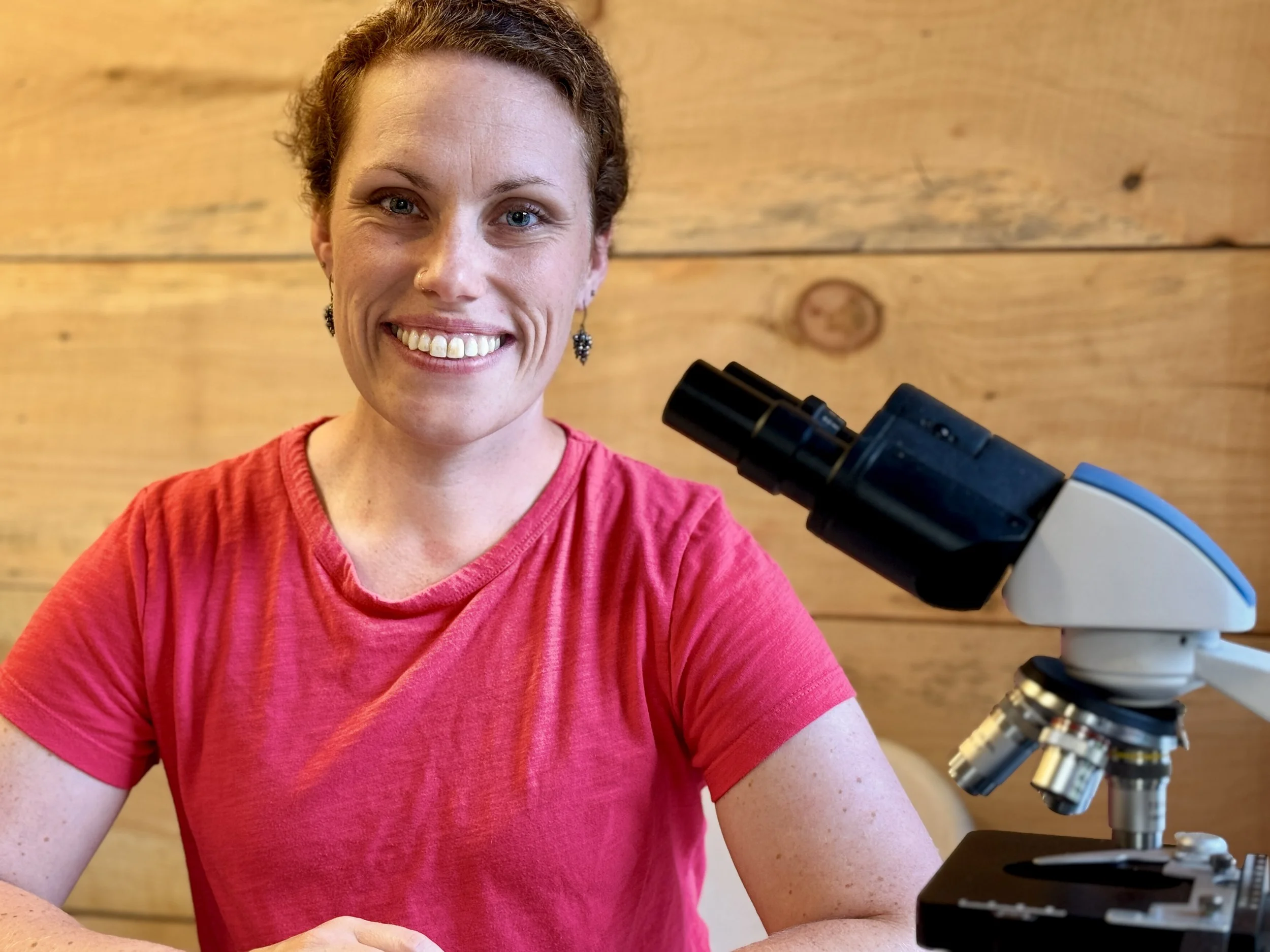
Carly Farmer, PhD
PhD • Veterinary Parasitologist • ACSRPC Certified FAMACHA® Instructor
Hi, I'm Carly.
I'm a veterinary parasitologist, small farm owner, and educator passionate about helping livestock and horse owners make informed, evidence-based parasite management decisions.
For over 15 years, I've worked in veterinary parasitology and diagnostic laboratory settings, performing and interpreting fecal egg counts while helping producers better understand parasite burdens and treatment decisions. Through these courses, my goal is to make those same practical skills accessible to farmers, horse owners, homesteaders, veterinary professionals, and anyone interested in learning to perform fecal egg counts with confidence.
Whether you're brand new to microscopy or already have some experience, I'll guide you step by step through the entire process, from collecting samples and performing the Modified McMaster technique to identifying parasite eggs and interpreting your results.
My teaching style is practical, approachable, and designed to build confidence, so you leave with the knowledge and skills to confidently perform fecal egg counts and make informed parasite management decisions for your own animals.
Practical, approachable training designed to build confidence.“Carly had a clear organized presentation with plenty of online resource materials that helped along the way. She has a patient demeanor which encouraged questions. And she paced the material nicely, not too slow or fast. She had a knack for pulling out the most important information without overwhelming, or being too detailed or boring in the allotted time. I feel pleased that our team has an important tool in their toolbox now. With practice, i am confident we have another set of datapoints that will improve overall herd health and decision making.”
— Liz Shaw, Morse Brook Farm
Ruminant Fecal Egg Counting Course
FAQs
-
Yes. A microscope is required to perform fecal egg counts. The course includes guidance on choosing the right microscope, setting it up, and using it confidently. If you don't have one yet, you can still attend the live classes and purchase your equipment afterward.
-
The course includes microscope recommendations, shopping links, student discounts, and a complete materials list, making it easy to choose the right microscope and supplies for class.
-
You'll receive a complete materials list immediately after enrolling, along with microscope recommendations, shopping links, and student discounts. In addition to a microscope, you'll need a McMaster slide, a gram scale, and a few other simple materials, many of which you may already have in your kitchen or barn.
-
No problem! Every live class is recorded, and you'll have 30-day access to the replay recordings. You'll also have lifetime access to the course materials.
-
These courses are designed for horse owners, livestock owners, homesteaders, veterinary professionals, and anyone interested in learning how to perform fecal egg counts. No previous microscope or laboratory experience is required.
-
The Equine course meets live on August 1 & 8, and the Ruminant course meets live on September 12 & 19. Both courses are taught live on Zoom and include plenty of time for demonstrations and questions.
-
For Class 1, no materials are needed. Just bring your favorite note-taking setup and your questions. If you'd like to participate in the optional live follow-along during Class 2, you'll need a fecal sample, microscope, and your testing materials.
What Students Are saying
“Fantastic course if you want to do your own FEC but need some direction on the proper procedures.”
— Justin Hoover
Ruminant Fecal Egg Counting Course
“A great course either for general knowledge about equine parasites or a tool in equine husbandry.”
— Anonymous Student
Equine Fecal Egg Counting Course
“This is a fun, but very informative course.”
— Anonymous Student
Equine Fecal Egg Counting Course
Ready to perform your own fecal egg counts?
Choose the course that's right for you and start building the skills to confidently monitor parasite burdens and make informed management decisions.
Please note: The September 2026 course is now full. Registration below is for the February 20 & 27, 2027 course.
What is it?
Learn how to perform fecal egg counts on sheep, goats, and cattle — from sample collection to interpreting results — in a live Zoom class with expert instruction by Dr. Carly Farmer.
When is it?
Saturday, February 20, 2027 11:00 AM ET (90–120 min)
Saturday, February 27, 2027 11:00 AM ET (90–120 min)
Who is this for?
Livestock owners, farmers, homesteaders, pet owners
Veterinary professionals
Cattle, sheep, and goat producers
Anyone managing herd health or curious about learning a new skill
With or without microscope experience
What will you learn?
Equipment and materials needed
Collecting and preparing fecal samples
Using a microscope and McMaster slide
Step-by-step Modified McMaster technique
Identifying common parasites in ruminants
Interpreting results for parasite management decisions
What’s included?
Two live virtual training sessions with Q&A via Zoom
Saturday, February 20, 2027 11:00 AM ET (90–120 min)
Saturday, February 27, 2027, 2026 11:00 AM ET (90–120 min)
30-day access to session replays
Lifetime access to downloadable course materials and resources
Materials checklist
Step-by-step Modified McMaster technique guide
Fecal egg count tracking templates
Ruminant parasite identification guide
Guided practice examples to build confidence with parasite identification
Sample collection and handling guidance
Flotation solution preparation instructions
Access to the private student Facebook group
Ongoing troubleshooting and educational support
Why it’s valuable?
Save money on vet bills
Monitor parasite loads on your own
Detect resistance and make informed herd health decisions
Build confidence in managing livestock internal parasites
Payment Information
Course Fee: $200 per household (includes you + one partner)
Registration includes one course login intended for use within a single household
Need access for more than two participants? Contact us for group rates
Preregistration and payment required to secure your spot
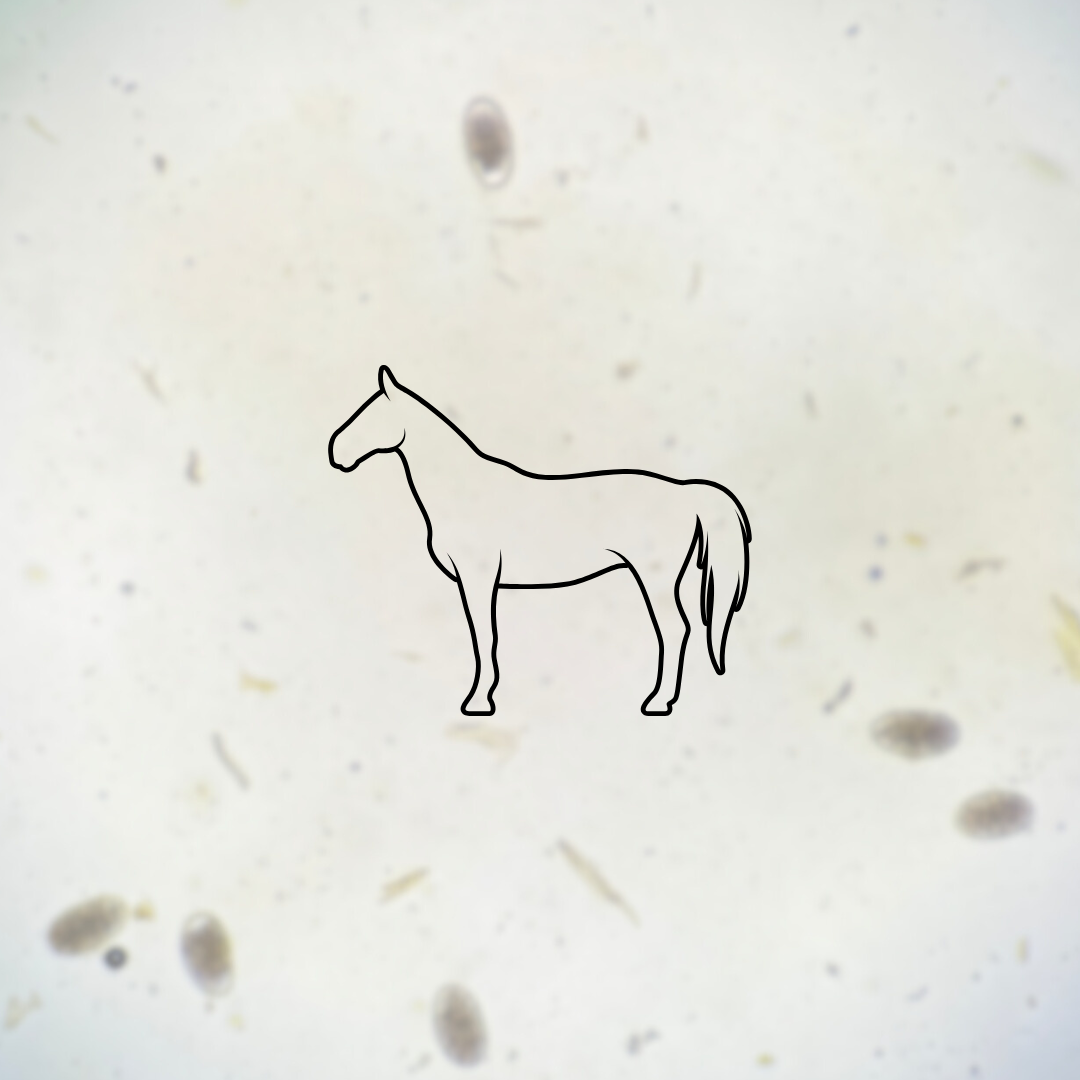
Please note: The August 2026 course is now closed. Registration below is for the March 6 & 13, 2027 course.
What is it?
Learn how to perform fecal egg counts on horses — from sample collection to interpreting results — in a live Zoom class with expert instruction by Dr. Carly Farmer. Core fecal egg counting principles are reviewed, with instruction tailored specifically to horses.
When is it?
Saturday, March 6, 2027 11:00 AM ET (90–120 min)
Saturday, March 13, 2027 11:00 AM ET (90–120 min)
Who is this for?
Horse owners, riders, and equine enthusiasts
Veterinary professionals and technicians
Anyone managing horse herd health or interested in learning a new skill
With or without microscope experience
What will you learn?
Equipment and materials needed for equine fecal egg counting
Collecting and preparing equine fecal samples
Using a microscope and McMaster slide
Step-by-step Modified McMaster technique for horses
Identifying common equine parasites
Interpreting results for parasite management decisions in horses
What’s included?
Two live virtual training sessions with Q&A via Zoom
Saturday, March 6, 2027 11:00 AM ET (90–120 min)
Saturday, March 13, 2027 11:00 AM ET (90–120 min)
30-day access to session replays
Lifetime access to downloadable course materials and resources
Materials checklist
Step-by-step Modified McMaster technique guide
Fecal egg count tracking templates
Equine parasite identification guide
Guided practice examples to build confidence with parasite identification
Sample collection and handling guidance
Flotation solution preparation instructions
Access to the private student Facebook group
Ongoing troubleshooting and educational support
Why it’s valuable?
Save money on veterinary parasite testing
Monitor parasite loads in your horses on your own
Detect resistance and make informed deworming decisions
Build confidence in managing internal parasites in horses
Payment Information
Course Fee: $200 per household (includes you + one partner)
Registration includes one course login intended for use within a single household
Need access for more than two participants? Contact us for group rates
Preregistration and payment required to secure your spot
Spring 2027 Live Course Bundle
Register for both the Ruminant and Equine Fecal Egg Counting Courses and save $50.
What is it?
Enroll in both the Ruminant and Equine DIY Fecal Egg Counting courses at a discounted rate — all in one bundle. Learn to perform fecal egg counts from sample collection to interpreting results for both horses and ruminants in live Zoom sessions with expert instruction by Dr. Carly Farmer.
Foundational material is shared across both courses, with species-specific protocols, parasite identification, and management strategies taught separately.
When is it?
Ruminant course:
February 20, 2027 at 11:00 AM ET
February 27, 2027 at 11:00 AM ET
Equine course:
March 6, 2027 at 11:00 AM ET
March 13, 2027 at 11:00 AM ET
Who is this for?
Livestock and horse owners, riders, and enthusiasts
Veterinary professionals and technicians
Anyone managing herd or equine health, or interested in learning a new skill
With or without microscope experience
What will you learn?
Equipment and materials needed for ruminant and equine fecal egg counting
Collecting and preparing fecal samples for each species
Using a microscope and McMaster slide
Step-by-step Modified McMaster technique for ruminants and horses
Identifying common parasites in ruminants and horses
Interpreting results to guide herd or equine parasite management decisions
What’s included?
Four live virtual training sessions with Q&A via Zoom
February 20, 2027 at 11:00 AM ET (Ruminant)
February 27, 2027 at 11:00 AM ET (Ruminant)
March 6, 2027 at 11:00 AM ET (Equine)
March 13, 2027 at 11:00 AM ET (Equine)
30-day access to session replays
Lifetime access to downloadable course materials and resources
Materials checklist
Step-by-step Modified McMaster technique guides for both equine and ruminants
Fecal egg count tracking templates
Equine and ruminant parasite identification guides
Guided practice examples to build confidence with parasite identification
Sample collection and handling guidance
Flotation solution preparation instructions
Access to the private student Facebook group
Ongoing troubleshooting and educational support
Why it’s valuable?
Save money compared to enrolling separately
Monitor parasite loads for both ruminants and horses on your own
Detect resistance and make informed deworming decisions
Build confidence in managing internal parasites across species
Payment Information
Course Fee: $350 per household (includes you + one partner)
Registration includes one course login intended for use within a single household
Need access for more than two participants? Contact us for group rates
Preregistration and payment required to secure your spot