How to Do Fecal Egg Counts at Home: A Step-by-Step Guide for Sheep, Goat, and Cattle Owners
Parasite management can feel tricky, but there’s a simple, reliable way to know exactly what’s happening in your herd: fecal egg counts (FECs). By testing your livestock at home, you can make informed decisions, avoid unnecessary deworming, and keep your herd healthy.
This post walks you through the basics of doing FECs at home, and shows you how the DIY Fecal Egg Counting Course can help you get accurate results with confidence.

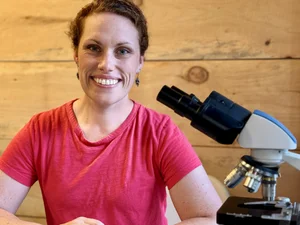
Me (Carly) with my flock of Katahdin sheep.
Why fecs matter
FECs are more than just numbers. They’re a tool to make informed decisions about parasite management. Treating your animals blindly can lead to unnecessary medication, wasted money, and even drug resistance.
Accurate counts allow you to:
Monitor herd health
Make data-driven treatment decisions
Track trends over time for better long-term management
Even small mistakes can impact the accuracy of your counts. That’s why learning the correct technique is essential and exactly what the DIY FEC Course covers.
What you’ll Need
Before you get started, you’ll need a few key items:
A microscope suitable for parasite identification
Containers and gloves for collecting samples safely
A flotation solution (we’ll talk about different types in the course)
And a few more materials…
Having the right equipment makes a huge difference. The course goes into detail about how to set up, source, and use every tool so your results are reliable.
Tip: You don’t need fancy equipment to get started — just the right guidance.
Overview of the steps
The FEC process involves:
Collecting the sample – Ensuring the sample is fresh and properly handled
Preparing the sample – Mixing it with a solution to make parasite eggs visible
Examining under the microscope – Identifying and counting the eggs
Counting and interpreting results – Understanding what the numbers mean for your herd
While these steps sound straightforward, accuracy depends on proper technique. The DIY FEC Course walks you through every step with images, troubleshooting tips, and video demonstrations to make sure your counts are reliable.
Common mistakes
Even experienced hobbyists make mistakes when doing FECs. Common issues include:
Misidentifying eggs under the microscope
Using the wrong solution or ratio
Miscounting eggs, leading to inaccurate treatment decisions
Learning the correct technique is critical. That’s why the course emphasizes hands-on guidance, ensuring you feel confident and avoid these pitfalls.
how the diy fecal egg counting course can help
Step-by-step demonstrations so you see exactly what to do
Troubleshooting tips to avoid common mistakes
Guidance on calculating egg counts and treatment decisions
Live Q&A sessions to ask questions about any problems you face
Free resources
Want checklists and guides to get started?
Join the Free Resource Library for instant access to practical tools.